
Folterfabriek Buchenwald. Overleven en collaboreren in een Duits concentratiekamp. (The Buchenwald Torture Factory. Surviving and Collaborating in a German Concentration Camp)
CegeSoma Public History Meeting – 2026-2

Lecture and discussion in Dutch with guest speaker Jan Willem Stutje
An interview by Widukind De Ridder
CegeSoma and the non-profit organization Friends of CegeSoma are pleased to invite you on 20 May 2026 to a lecture and discussion (in Dutch) on Jan Willem Stutje’s book ‘Folterfabriek Buchenwald. Overleven en collaboreren in een Duits concentratiekamp’ .
In this book, Jan Willem Stutje explores what Primo Levi referred to as the “gray zone”: that ambiguous space between victims and perpetrators, within which the system of delegated authority established in Nazi concentration and extermination camps operated. Rarely addressed in the Dutch-speaking world since Gie van den Berghe’s pioneering work published in 1987 (Met de dood voor ogen), this issue is examined here through an emblematic case: Buchenwald.
Beginning in 1942, in the context of total war and the war economy, the Nazi authorities increasingly prioritized so-called “red” political prisoners at the expense of so-called “green” common-law prisoners. Entrusted with supervisory and administrative responsibilities, some of them were able to directly influence the fate of their fellow prisoners, sometimes even determining their chances of survival.
Through his analysis of the kapo system, Jan Willem Stutje highlights the power dynamics, political divisions, and moral dilemmas within the camp. He also demonstrates how the SS drew upon the political prestige, militant traditions, and organizational discipline of the labor movement to structure and control the concentration camp system. His investigation directly examines the mechanisms of selection, the protection afforded to certain officials, their assignment to less arduous work details, or their admission to the infirmary, while exploring the blurred boundaries between survival, domination, and compromise.
In this Public History Meeting, the author will dialogue with Widukind De Ridder and seek to answer several significant questions. What challenges do research on concentration camps and their public memory face to this day? How should we understand the “gray zone” today? How can we comprehend the role of communist prisoner-officials in the internal organization of Buchenwald? Can these reflections be extrapolated to other camps? To what extent do postwar testimonies allow us to reconstruct the subtleties of power relations within the camp? What do competing memories of Buchenwald reveal about the political uses of the past, from the immediate postwar period to the Cold War?
By placing the history of the labor movement at the heart of his analysis, Stutje brings the history of the concentration camps out of its relative isolation and connects it to much broader debates on the rise of fascism in the 1930s and the emergence of the postwar social and political order.

Jan Willem Stutje is a historian. He has been affiliated with the International Institute of Social History (IISG) in Amsterdam and worked at the universities of Brussels, Groningen, and Ghent. He is the author of biographies of Paul de Groot, Ernest Mandel (translated into English, French, German, Greek, and Italian), Ferdinand Domela Nieuwenhuis (nominated for the Libris History Prize), and Hendrik de Man. His book 'Folterfabriek Buchenwald. Overleven en collaboreren in een Duits Concentratiekamp’ received the 2025 Shoah Literature Prize.
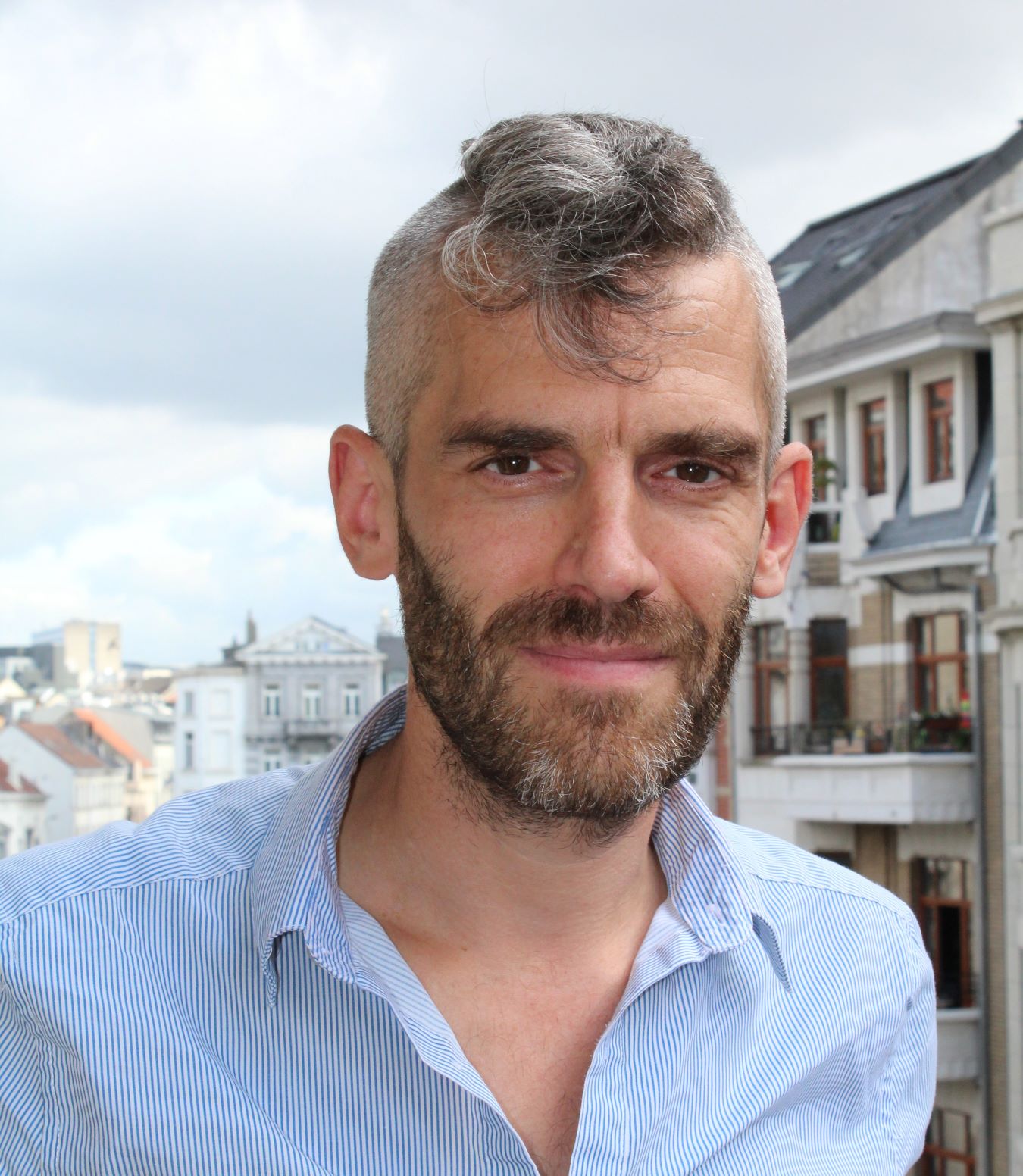
Widukind De Ridder holds a Ph.D. in history (VUB). His research focuses on socio-economic history and the history of political thought (19th and 20th centuries). As a researcher with FED-tWIN Belcowar, he divides his time between CegeSoma/State Archives and the Moderniteit en Samenleving, 1800-2000 (MoSa) research unit at KU Leuven.