
In memoriam : Etienne Verhoeyen (1945-2026)
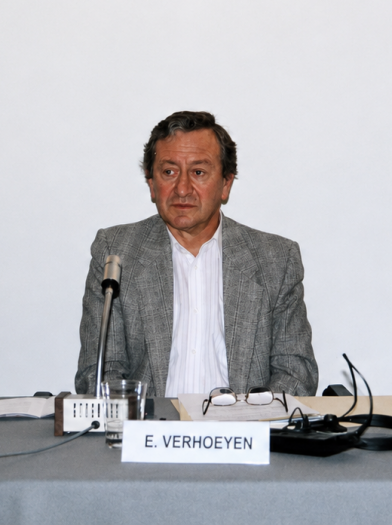
On 19 July 2026, Etienne Verhoeyen died aged 80. Etienne served as a correspondent for CegeSoma and later as an associate researcher, but he was also involved in various other CegeSoma activities. Etienne Verhoeyen was above all an eminent historian of World War II and the author of seminal publications on various aspects of the history of the occupation and the postwar period.
However, Etienne Verhoeyen did not seem destined to become a historian. He studied Moral Science at Ghent University, a new field of study established in 1963–64 under the leadership of Leo Apostel and Jaap Kruithof. The program was designed to train high school teachers for the subject “non-confessional ethics” (moral philosophy), which was incorporated into the official curriculum following the School Pact. Etienne was among the first generation of graduates in 1968, with a master’s thesis on the political and social stances expressed by protest songs in the United States, Great Britain, and France after 1945. He also co-authored a book on Family, Community, and Society (Gezin, commune en maatschappij) with Magda Michielsens and Chris Loones. Etienne became an ethics teacher but developed a parallell career track that led him to the history of World War II.
Toward the History of World War II
A first step was three ’Courriers Hebdomadaires’ he wrote for CRISP in 1974, 1975, and 1976 on the far right in Belgium. In 1981, he published a book with the Masereel Fund on the same theme, co-authored with Frank Uytterhaegen, covering 50 years of the right and far right in Belgium. By then, he had already been working for four years as a research associate at the BRT (where he would later become a producer), conducting intensive archival research to document and substantiate Maurice De Wilde’s programs on WWII.
During that period, Etienne Verhoeyen began publishing on one of the topics for which he would become known: the economic history of World War II and economic collaboration. The American historian John Gillingham wrote his dissertation on Belgian Business in the Nazi New Order. It was published in 1977 by the Jan Dhondt Foundation and sparked controversy and debate, including with the Leuven economist Fernand Baudhuin. In 1979, a Dutch translation was published by the Leuven-based publisher Kritak. Etienne Verhoeyen provided several critical annotations regarding factual inaccuracies in the book and wrote an afterword about the government and the Galopin Committee, a central body responsible for steering the Belgian economy during the occupation. The committee was discussed in Gillingham’s book, but in Etienne’s view, the American author did not devote enough attention to its relationship with the government. In the afterword, he addressed that relationship himself. Although the short 16-page article was based primarily on published sources and only a few archival documents, it is relevant, critical, nuanced, and stands out for the pertinent questions it raises.
Etienne Verhoeyen had already written an extensive critical review of Gillingham’s book for the Journal of Belgian History in 1978. In it, he pointed out a number of shortcomings and gaps and criticized the author for a lack of nuance. However, he went a step further by proposing new avenues of research—such as the continuity of structures during an occupation—and suggesting methodological approaches, in this case a biographical approach that he illustrated using the—particularly well-chosen—example of Léon Bekaert. In 1986, Etienne Verhoeyen published a comprehensive article in Bijdragen on the Galopin Committee and the committee’s Galopin doctrine and politics of the lesser evil, based in part on new archival material. Although the article is forty years old and archives that were closed at the time have since become available, this article remains one of the most original in its approach, particularly regarding the political sensibilities of Galopin and his group.
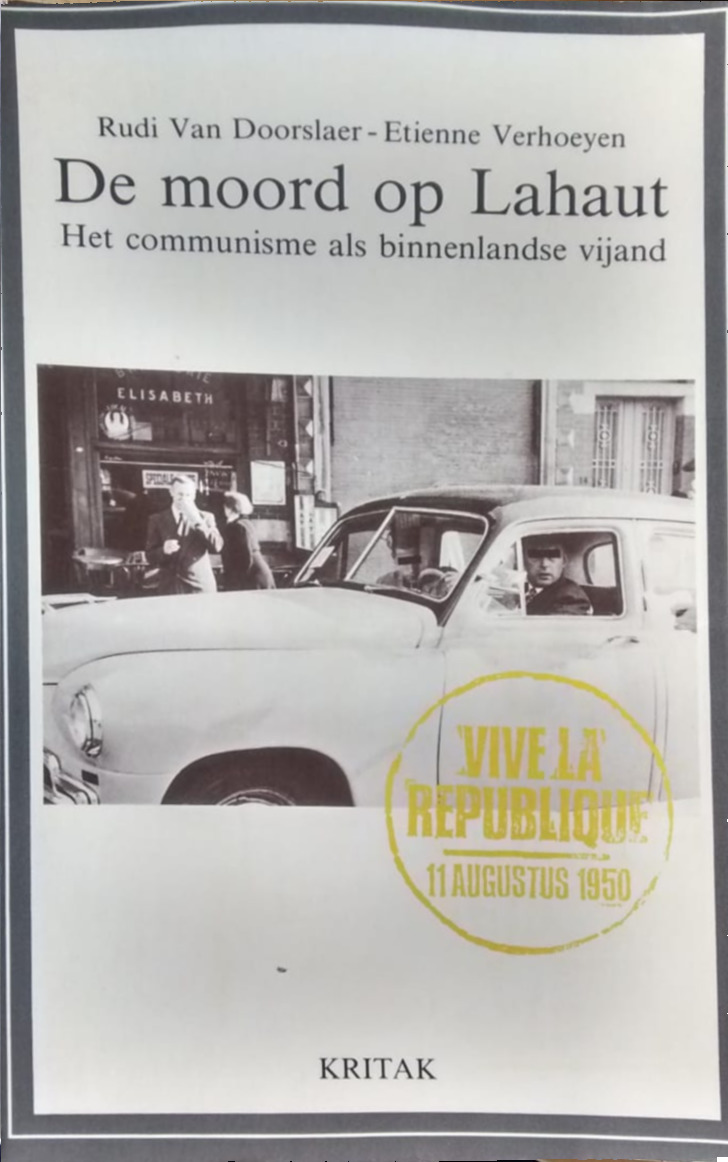 Etienne Verhoeyen published works on many other topics related to the history of the Occupation and the prewar period, such as the financing of the newspapers De Schelde and Volk en Staat between 1929 and 1940. He also shifted his focus to the postwar period with the book on the Murder of Lahaut (De moord op Lahaut. Het communisme als binnenlandse vijand), which he co-authored with Rudi Van Doorslaer, published by Kritak in 1985. Etienne Verhoeyen also contributed to various volumes of the book series Belgium in World War II, which accompanied the BRT(N)’s broadcasts on that topic.
In short, Etienne Verhoeyen had built up a broad range of expertise. It is perhaps no coincidence, then, that in 1993 he was the first to publish a comprehensive overview of the history of the occupation (België bezet 1940–1944), which examined the subject from various perspectives. The book was translated into French just one year later. However, the field closest to Etienne Verhoeyen’s heart was the history of the resistance in general and of the intelligence and action services in particular.
The more than 87 works and articles by Etienne Verhoeyen cataloged in CegeSoma's library include not only numerous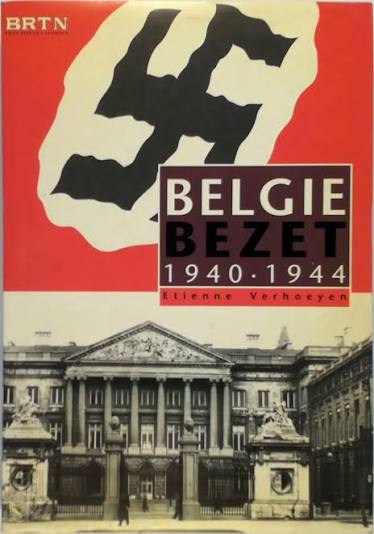 contributions on the resistance in Belgium from 1940 to 1944, but also a great many studies on the Belgian, French, and German police and secret services from the interwar period through the aftermath of World War II. We would like to highlight in particular his in-depth study of the Marc intelligence service, which was published in 1991 and 1992 in the Cahiers/Bijdragen of what would later become CegeSoma, and his 2011 work Spionnen aan de achterdeur: de Duitse Abwehr in België 1936–1945.
 Etienne Verhoeyen served as a correspondent and later as an associate researcher; he also wrote reviews for the Journal of Belgian History, spoke at the major colloquia organized by the Center in the 1990s, cataloged archives—such as those of the Luc-Marc intelligence services, Mill, and Zéro, the William Ugeux archive, and general files from the State Security Service on Belgian intelligence and action services during World War II, and wrote articles for BelgiumWWII. In fact, it is thanks to him that most of those collections—and many others—were integrated into the CegeSoma collections. Etienne Verhoeyen was willing to share his in-depth knowledge of sources on the history of World War II with others, such as novice researchers.
Etienne Verhoeyen leaves behind an impressive body of work—books and articles—that have shaped, and will long continue to shape, Belgian historiography on World War II and the postwar period.