
The assassination of Julien Lahaut (2011-2014)
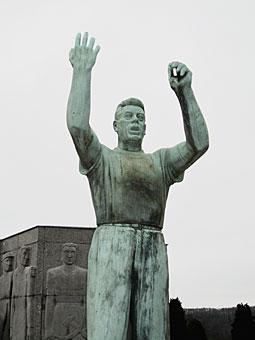
In 2011, CegeSoma began an investigation requested by the Senate into the murder of Julien Lahaut. The deputy and chairman of the Communist Party of Belgium was cold-bloodedly shot dead by two strangers in front of his house in Seraing on the evening of August 18, 1950. The judicial investigation at the time was unable to identify the culprits and was finally concluded in 1972 with an acquittal .
A 2008 Senate resolution precisely laid out the mission of the scientific study: the identification of the perpetrators and their motives, the report on the precise course of events and the analysis of the judicial investigation. Finally, also the manner in which, after the conclusion of the judicial investigation, information about the case had come into the public domain.
Indeed, despite the findings of several investigators, especially historians Etienne Verhoeyen and Rudi Van Doorslaer in 1985, a veil of secrecy remained around the murder. The fact that the judicial investigation had failed to identify the perpetrators and/or principals of this political assassination also naturally raised questions.
Investigators concluded in 2014 that the murder was committed by members of a private intelligence network led by André Moyen. Because of the collusion between members of the network and official services, they felt directly or indirectly covered when they took action. Lahaut thus became the victim of a collusion dynamic, rooted more specifically in the hottest years of the Cold War.
The results of the research by E. Gerard, W. De Ridder and F. Muller can be found in the publication, 'Wie heeft Lahaut vermoord? De geheime Koude Oorlog in België', published by Davidsfonds in 2015 ('Qui a tué Julien Lahaut? Les ombres de la guerre froide en Belgique' published by Renaissance du livre in 2015.